
Every founder who posts jobs on LinkedIn eventually learns the folk remedy: when the post goes quiet, delete it and post it again. Fresh post, fresh position in search, fresh burst of applicants. It worked for years, it cost nothing, and it worked precisely because it gamed how LinkedIn surfaces new posts. Which is why LinkedIn shut it down.
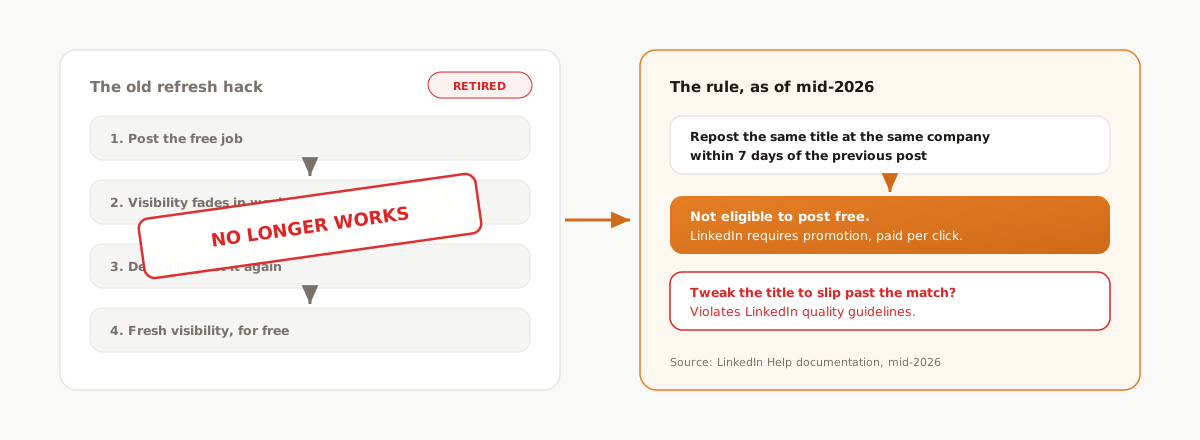
LinkedIn's current documentation is unambiguous about it. Job posters who repost a free job within 7 days will be required to promote it. A post with the same job title and company as a previous post is ineligible to be posted for free within that window. And the obvious workaround gets called out by name: tweaking the title to evade the rule violates LinkedIn's quality guidelines.
If your mental model of a free LinkedIn job post still includes "I can always just repost it," this changes your posting strategy more than any other platform rule. Here is what the rule says, why the repost urge exists in the first place, and what to do instead.
What the 7-day repost rule actually says
The rule, as LinkedIn documents it as of mid-2026, has three parts worth reading separately, because each one closes a different door.
Reposting a free job within 7 days forces promotion. This is not a warning or a soft nudge. If you close a free post and put it back up inside the window, the free option is gone and you are in the paid flow. The refresh that used to cost nothing now has a price tag attached at the exact moment you feel most desperate for applicants.
Same title plus same company means ineligible, not discouraged. The rule keys on the combination of job title and company. It does not matter whether you edited the description, changed the location, or rewrote the screening questions. If the title and company match a previous post, the free option is off the table for 7 days.
Title tweaks are named as a violation. LinkedIn anticipated the obvious dodge. Renaming "Senior Backend Engineer" to "Sr. Backend Engineer" or "Backend Engineer (Senior)" to slip past the matcher is explicitly described as a violation of LinkedIn's quality guidelines. You are not finding a loophole; you are documenting an attempt to evade platform rules from an account you use to represent your company.
Why the repost urge exists at all
The repost hack was never superstition. It was a rational response to how free posts decay, and the decay is by design.
According to LinkedIn's own comparison of free and promoted jobs, a free post lives under several limits at once: you get one free job at a time over 30 days, the post is paused after being active for 14 days, it stays active but disappears from search results once it hits the free applicant limit (typically somewhere between 10 and 30 applicants, depending on the role), and its visibility in search results fades over time even before any of that. We walk through each limit in detail in the real lifespan of a free LinkedIn job post, but the summary is: a free post is a short window, not a standing ad.
Application flow makes the window feel even shorter. Appcast's job ad data shows that more than half of all applications arrive within the first ten days of a posting. So the quiet you notice in week two is not a signal that something broke. It is the natural back half of a front-loaded curve, arriving right on schedule. The old hack responded to that quiet by restarting the curve. The rule now asks you to pay for the restart, which forces the question the hack let you avoid: do you actually need more applicants, or do you need to work the ones you have? We cover how to play that opening stretch in the first 10 days of a LinkedIn job post.
Check your timing before you touch the post
Before you close or repost anything, run your situation through the checker below: it tells you when a free repost becomes possible and what happens if you move sooner.
Repost rule checker
Answer two questions to see when a free repost becomes possible and what reposting sooner would cost you.
Earliest free repost: in 5 days.
Reposting the same title and company sooner means LinkedIn requires you to promote the job, paid per click. Waiting out the window keeps the free option available.
Based on LinkedIn Help documentation, mid-2026. Platform rules change; this checker explains the published rule and is not a guarantee of how LinkedIn will treat a specific post.
The point of checking first is that closing a post is irreversible in a way it did not used to be. Under the old rules, closing early was harmless because reposting was free. Now, closing a free post three days in, then changing your mind, leaves you with four days of dead air or a forced promotion. The rule quietly raises the stakes of every close decision.
The title-tweak trap
It is worth dwelling on the third clause, because every founder who reads the rule has the same thought within ten seconds: "what if I just change the title a little?"
LinkedIn wrote that thought into the policy. Tweaking titles to evade the repost rule is a violation of their quality guidelines, stated in the same help article as the rule itself. That phrasing matters. It moves the title tweak out of "gray area" and into "documented violation," and it means the platform is actively looking for the pattern: same company, near-identical title, posted right after a previous post closed.
Your LinkedIn account is your hiring infrastructure: your company page, your job posts, your ability to message candidates. Trading its standing for one week of free visibility is a bad deal even when it works, and the pattern it creates (repeated near-duplicate posts) is exactly what candidates report as spammy and what LinkedIn's quality systems exist to catch.
There is also a candidate-side cost that no policy needs to enforce. People who follow your company see the same role appear, vanish, and reappear with a slightly different name. To an applicant deciding whether your startup is a serious place to work, that reads less like growth and more like churn.
If you repost early, you are choosing to pay
Sometimes paying is the right call, so it is worth knowing what the paid lane actually buys. Per LinkedIn's documentation on job post visibility, promoted posts work on a cost-per-click model, and visibility and traffic scale with the budget you set. Promoted posts are shown at the top of search results and can carry a Promoted tag.
The mistake is not promotion itself; it is promotion as a panic response to a quiet inbox. If you are going to pay, decide on evidence: how many applicants did the free window produce, how many of them were worth an interview, and is the gap a visibility problem or a job-post problem? A role that attracted twenty applicants but zero qualified ones does not need more budget. It needs a better job description or better screening questions before any new traffic arrives.
What to do instead of the refresh hack
The rule removes a crutch, and the honest response is to stop needing it. Three habits replace it.
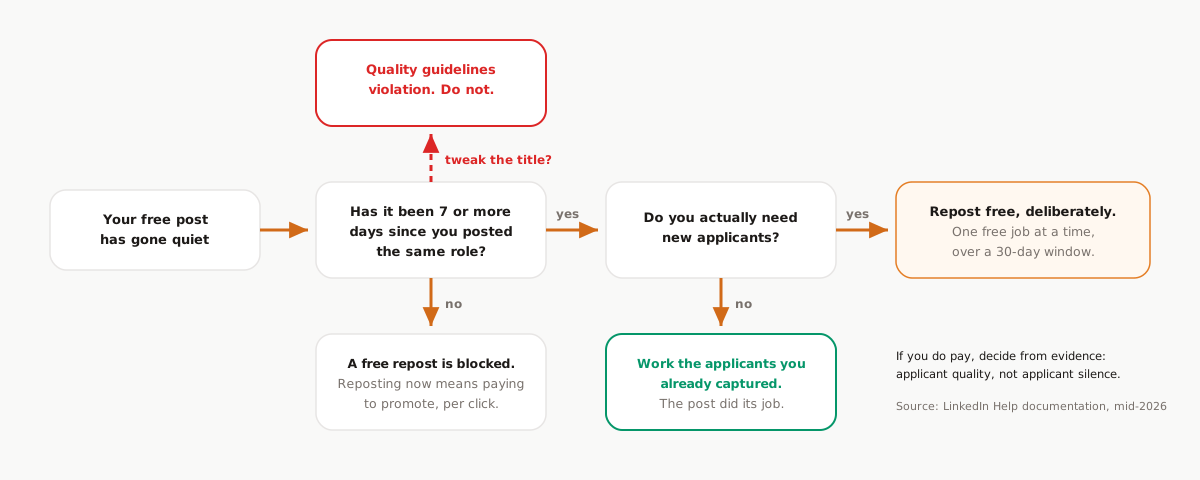
Plan the free window as a campaign, not a fire-and-forget. A free post has a beginning, a middle, and an end, and you now know roughly where they are. Post when you are ready to respond to applicants that same week, have screening questions live at publish, and treat the first stretch as the main event rather than a warm-up.
Decide promotion on a calendar, on evidence. Pick the day you will make the promote-or-not call before you post, and decide it from the numbers: applicant quality, not applicant silence. A deliberate promotion mid-window beats a forced promotion after a panicked repost, because you chose the timing and the budget instead of having the rule choose for you.
Capture applicants continuously, so a repost is a choice and not a rescue. The worst version of the repost urge comes from losing access to what you already had: the post closes or pauses, the applicant list sits inside LinkedIn, and reposting feels like the only way to get moving again. If every applicant is already exported, parsed, and reviewable outside the post, the post closing is a non-event. You finish screening on your own schedule and repost only if the pipeline genuinely ran dry.
Where Reordinal fits: making the repost decision boring
That third habit is the one Reordinal exists for. The Chrome extension exports your LinkedIn Easy Apply applicants in batches, each with their resume PDF and their screening question answers, into a job in Reordinal. From there the applicants get parsed and scored against your role criteria, and you can filter by screening answers and score instead of paging through LinkedIn's applicant panel. The full walkthrough is in the export guide.
That changes what a quiet post means. When the free window ends, you are not staring at a dead post wondering whether to repost. You are looking at a scored, filterable list, and the repost question answers itself: if the shortlist is strong, you interview; if it is thin, you know exactly why, and you can decide between promoting and rewriting with data instead of dread. And because applicants from closed LinkedIn jobs can still be imported, even a post you closed too hastily is recoverable without touching the repost button at all.
The 7-day rule punishes teams that treat reposting as a rescue. It barely affects teams that never need rescuing.
Frequently asked questions
What happens if I repost a LinkedIn job within 7 days?
As of mid-2026, LinkedIn requires you to promote a free job that you repost within 7 days. A post with the same job title and company as a previous post is not eligible to be posted for free inside that window, regardless of edits to the description.
Can I change the job title slightly to repost for free?
No. LinkedIn's help documentation states that tweaking titles to evade the repost rule violates its quality guidelines. It is a documented violation rather than a loophole, and it puts your account's standing at risk.
Does deleting and reposting a LinkedIn job still reset its visibility?
The old delete-and-repost refresh no longer works for free posts. Reposting the same title and company within 7 days forces you into promotion, so the visibility reset now has a cost-per-click price attached.
How long should I wait before reposting a job on LinkedIn?
At least 7 days if you want the free option, per LinkedIn's current documentation. The better question is whether you need to repost at all: if you exported and screened the applicants you already received, repost only when the pipeline is genuinely thin.
Why did my free LinkedIn job post stop getting applicants?
Free posts fade by design: they pause after 14 active days, leave search results after the free applicant limit of roughly 10 to 30 applicants, and lose search visibility over time. Appcast's data also shows more than half of applications arrive in the first ten days, so a quiet second week is normal.